
Historical report · observations from September 17, 2026
Separate the signals Volatility describes movement; flows describe one demand channel.
Compare the clocks Hourly closes, rolling returns and daily fund totals use different windows.
Seek confirmation Look for sustained inflows and expanding matched stablecoin supply.
Read the full analysis and sources
A quieter options market can coexist with weak ETF demand and rising Treasury yields. These indicators answer different questions. Reading them together helps avoid turning a fall in expected price movement into an unsupported bullish forecast.
Our September 17 morning snapshot provides an example: Bitcoin's rolling return was positive, its options-implied volatility was lower, and the latest completed ETF sessions still showed outflows. The useful task is to explain those differences without forcing them into a single story.
Volatility measures movement, not direction
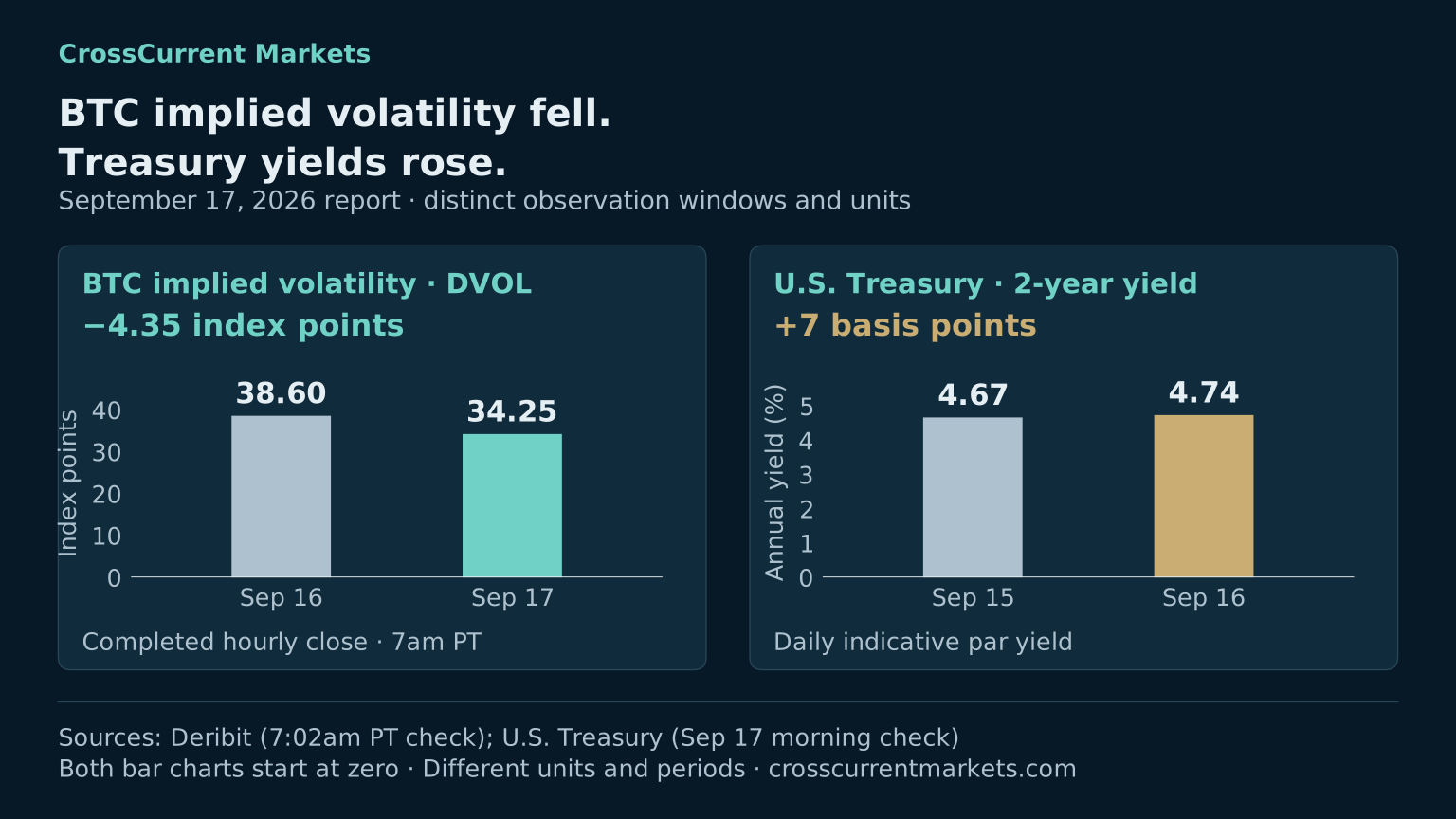
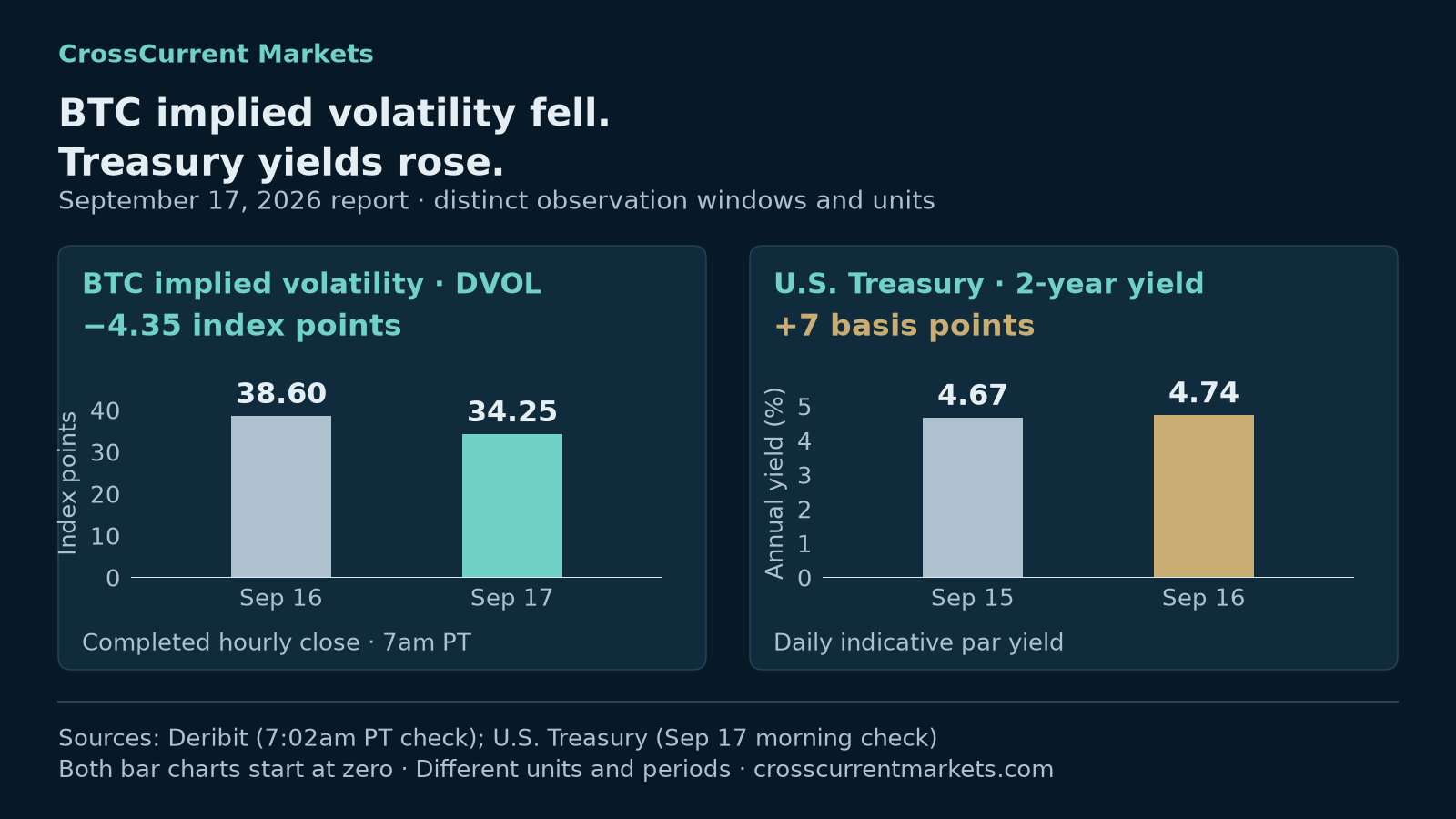
Deribit's BTC DVOL is an index of 30-day annualized implied volatility. In the completed hour ending September 17 at 7am PT, it closed at 34.25, compared with 38.60 at the same hour a day earlier. The decline was 4.35 index points. Deribit data
The reading comes from options pricing. It describes implied variability rather than a promise about future realized volatility. In particular, 34.25 does not mean Bitcoin is expected to rise 34.25%, or that there is a 34.25% chance of a particular outcome.
A market can become less volatile while moving up, down or sideways. Lower implied volatility can therefore be consistent with several demand conditions. It is useful counterevidence to a claim that expected turbulence is escalating, but it cannot independently establish why the price is moving.
Treasury yields answer a different question
The two-year Treasury par yield rose from 4.67% on September 15 to 4.74% on September 16. The ten-year rose from 5.00% to 5.01%. These are annual yields from a dated Treasury curve, with different units and reference windows from DVOL. Treasury data
Higher yields can affect the attractiveness of holding interest-paying assets and the wider financing environment. The Fed influences financial conditions through current policy and expectations of future policy, but the resulting transmission to spending, investment and asset prices is not identical across markets. Federal Reserve explanation
Our inference is limited: higher dated yields provide little confirmation of easier financing conditions in those observations. They do not require Bitcoin to fall. Nor can one full-day yield change isolate the causal impact of the Fed decision.
Demand needs separate evidence
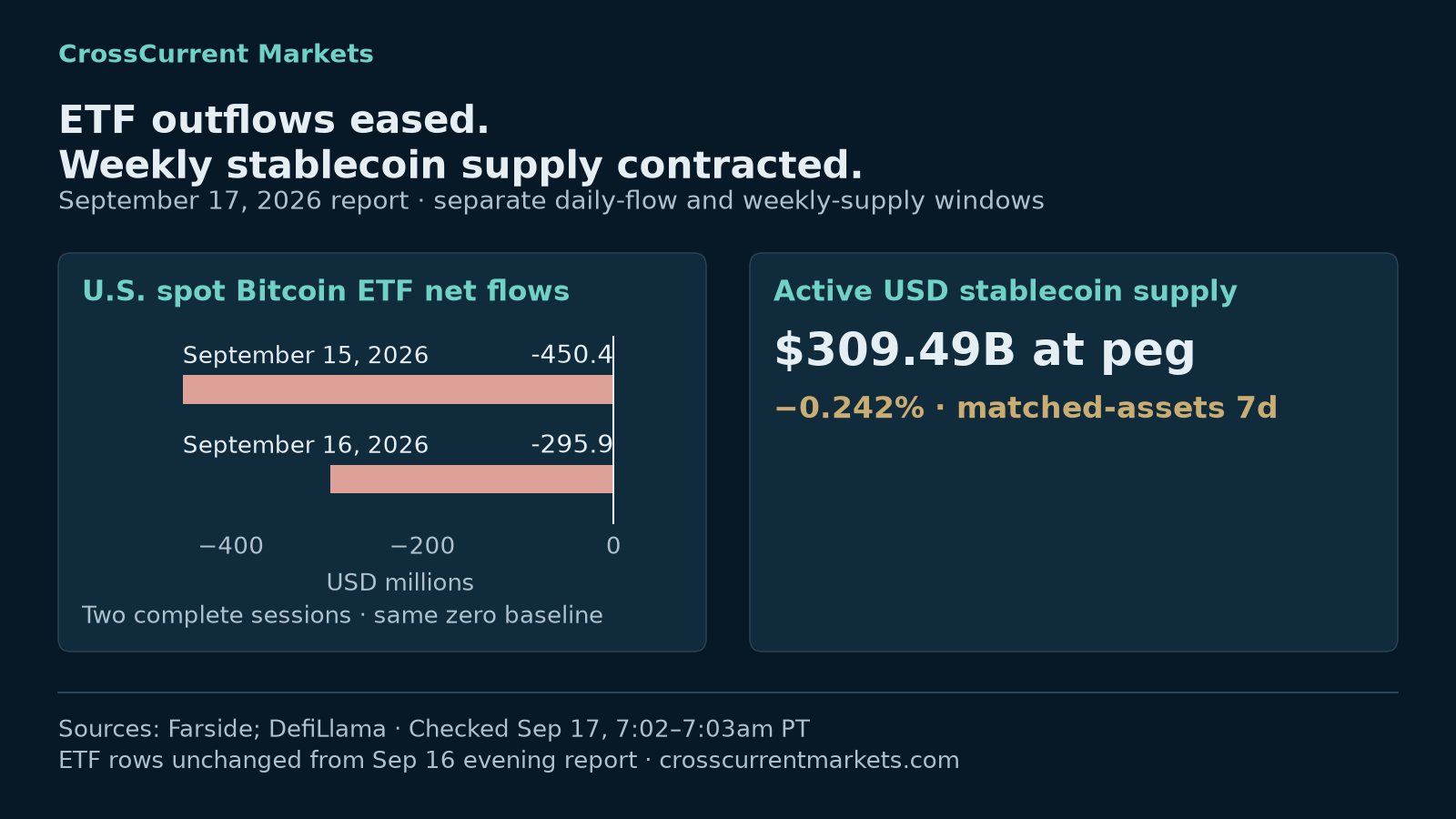
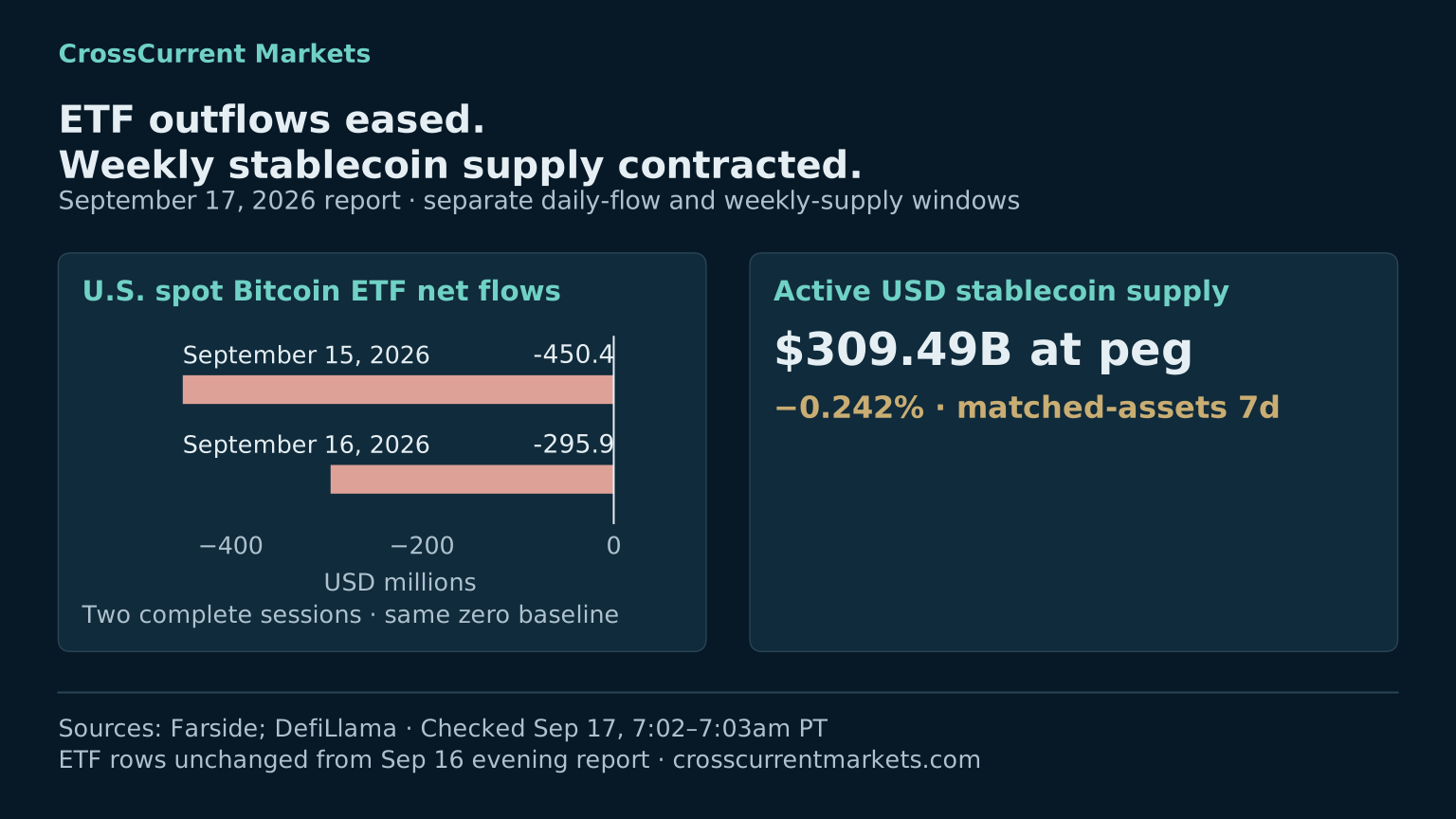
U.S. spot Bitcoin ETFs recorded $450.4M of net outflows on September 15 and $295.9M on September 16. The smaller second outflow was an improvement in magnitude, but both sessions still removed money from that investment channel on a net basis. ETF flows do not represent every buyer and seller of Bitcoin. Farside
Active USD stablecoin supply at our September 17 morning check was $309.49B at peg, with a matched-assets seven-day change of −0.242%. That describes outstanding supply. It cannot establish how much was spent buying Bitcoin, retained for payments, or held for other purposes. DefiLlama
This is why a positive BTC return should not automatically be labeled an institutional-inflow rally. Price resilience is observable; a particular explanation for the buyers behind it needs its own evidence.
Compare the clocks before comparing the story
| Measure | Window in this example | What it does not establish |
|---|---|---|
| BTC return | Rolling 24 hours ending at the 7:02am PT check | A return measured solely after the Fed announcement. |
| DVOL comparison | Completed 7am PT hourly closes one day apart | Price direction or guaranteed future calm. |
| Treasury yield change | September 15 versus September 16 daily observations | A live September 17 yield or isolated policy effect. |
| ETF flows | Completed September 15 and 16 sessions | Thursday's result or total market demand. |
| Stablecoin supply | Matched seven-day comparison | Actual purchases of Bitcoin. |
The practical discipline is to retain those dates, use matching windows where comparisons require them, and keep incomplete sessions out of completed-session totals. A fresh retrieval does not make the underlying observation fresh.
The evidence that would strengthen the case
Repeated ETF inflows alongside expanding matched stablecoin supply would offer better support for a broadening demand interpretation. Easier financing conditions would add another piece of evidence. None guarantees a price outcome; disagreement between the indicators remains worth investigating.
The September 17 evidence supports a narrower conclusion: expected volatility cooled while measured demand remained soft and dated Treasury yields rose. Read the full September 17 market report for the price snapshot, labor and housing releases, and next scheduled checks. The analysis is informational and preserves its original observation windows.
Archived report · September 17, 2026. Values retain their original dates.